Would you like to switch to the accessible version of this site?

Go to accessible site Close modal window

Don't need the accessible version of this site?

Hide the accessibility button Close modal window
Accessibility View Close toolbar
Menu
  • Home
  • New Patient Center
    • What to Expect
    • Veterinary Resources
    • Payment Options
  • About Us
    • Services
    • Meet our team
  • Petsimonials
  • Contact Us
  • Blog
  • Veterinary Topics
    • Pet Health
      • Chronic Conditions
      • Digestive and Oral Health
      • Diseases and Viruses
      • Pests and Parasites
      • Orthopedics
    • Today's Veterinarian
    • Choosing Your Pet
      • Finding Your Pet
      • Cats
      • Dogs
      • Exotics
        • Amphibians
        • Birds
        • Reptiles
          • Lizards
          • Turtles
      • Small Mammals
        • Ferrets
        • Rabbits
        • Domesticated Animals
          • Prairie Dogs
        • Pocket Pets
          • Chinchillas
          • Guinea Pigs
          • Hamsters
          • Hedgehogs
          • Rats
      • Livestock
        • Cows
        • Donkeys, Horses & Mules
        • Goats
        • Pigs
        • Poultry
        • Sheep
    • Living With Your Pet
      • Bringing Your Pet Home
      • Children and Pets
      • Providing Care
      • Travel
      • Saying Goodbye
    • Newsletter Library
      • Cats
      • Tips for Pet Owners
      • Behavior & Training
      • Fleas & Parasites
      • Keeping Pets Healthy
      • Recognizing Illness
      • Nutrition & Food
      • Pet Dangers
      • Seasonal Topics
      • Visiting the Vet
      • Equine
      • Newsletter Archive
        • Fun with Pets
        • Unbelievable Pets
    • Video Newsroom
      • Health Topics
      • Technology and Science
      • Other Interests
    • Newsletter Library
    • Client Survey
    • Pets4Kids

Roxy Ann Veterinary Hospital

541-664-1521

Exclusive Offer

First Visit is FREE

Sign up now

Error!

    • Home >
    • Articles >
    • Feline >
    • Pet Health >
    • Chronic Conditions >
    • Heart Problems

    Heart Problems

    • Created in Feline, Pet Health, Chronic Conditions
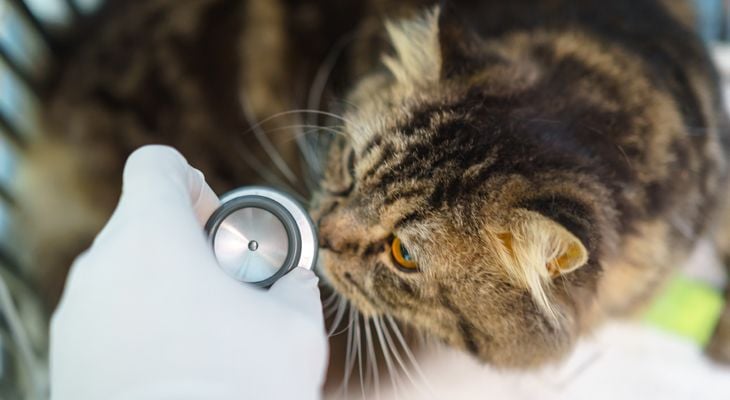
    cat looking at stethoscope
    A cat’s apricot-sized heart is susceptible to several problems. Some develop in young kittens while others may strike at any age.

    Hypertrophic Cardiomyopathy

    Cardiomyopathy results from a structural abnormality of the tissue around one or more of the heart’s chambers. It disrupts the heart’s normal blood pumping and collecting functions, which can lead to blood clots, respiratory distress and even death.

    Some cases of cardiomyopathy are genetic. Others are unknown. Some other diseases, such as hyperthyroidism and high blood pressure, can also cause cardiomyopathy.

    This disorder comes in several different types, the most common of which is hypertrophic cardiomyopathy (HCM). This thickening of the left ventricle’s muscle tissue is probably hereditary and most prevalent in male cats. The upper chambers enlarge and fill with blood, increasing lung pressure and causing shortness of breath. Blood clots may develop, sometimes making their way to the cat’s rear legs, where they produce sudden lameness and severe pain. Other symptoms include lethargy and open-mouthed or rapid breathing. HCM is relatively rare and requires immediate veterinary intervention. Medications may stabilize the patient.

    Restricted Cardiomyopathy

    Scar tissue buildup in the ventricle’s muscle causes restricted cardiomyopathy. This condition prevents the heart from relaxing, filling and emptying the way it normally should with each heartbeat.

    Dilated Cardiomyopathy

    This relatively rare form of cardiomyopathy involves a dilated, poorly contracting left ventricle. This decreases blood from the heart, which can lead to heart failure. Since researchers linked dilated cardiomyopathy to a lack of the amino acid taurine, manufacturers began adding it to cat food. Now veterinarians rarely see this disorder.

    Congenital Heart Disorders

    Ventrical Septal Defect

    About 1 to 2 percent of kittens are born with congenital heart disorders. The most common is ventricular septal defect (VSD), which indicates a hole in the barrier between ventricles. If the hole is small and the pressure between the ventricles weak, the VSD is no big deal. However, a bigger hole can trigger conditions that range from exercise intolerance to congestive heart failure.

    Patent Ductus Arteriosus

    Patent ductus arteriosus is another congenital cardiac condition. With this disorder, a connection between the aorta and a major blood vessel fails to close after birth, as it does in a normal kitten. This causes excessive blood to flow from the kitten’s hearts to its lungs. If caught soon enough, there is a simple surgical fix.

    Mitral Valve Dysplasia

    Mitral valve dysplasia results from a poorly functioning mitral valve. The valve fails to regulate blood flow between the left atrium and ventricle. This blood backup causes vomiting, weight loss, exercise intolerance and, in some cases, blood clots.

    All these congenital disorders are characterized by a swooshing sound in the heart. If a veterinarian hears this sound, he or she will assess the defect and devise the best course of action.

    If your cat is struggling to breathe and/or has difficulty moving his or her hind legs, heart trouble may be the culprit. Call our office right away so we can help.

    • Pet Health
      • Chronic Conditions
      • Digestive and Oral Health
      • Diseases and Viruses
      • Pests and Parasites
      • Orthopedics
    • Today's Veterinarian
    • Choosing Your Pet
      • Finding Your Pet
      • Cats
      • Dogs
      • Exotics
        • Amphibians
        • Birds
        • Reptiles
          • Lizards
          • Turtles
      • Small Mammals
        • Ferrets
        • Rabbits
        • Domesticated Animals
          • Prairie Dogs
        • Pocket Pets
          • Chinchillas
          • Guinea Pigs
          • Hamsters
          • Hedgehogs
          • Rats
      • Livestock
        • Cows
        • Donkeys, Horses & Mules
        • Goats
        • Pigs
        • Poultry
        • Sheep
    • Living With Your Pet
      • Bringing Your Pet Home
      • Children and Pets
      • Providing Care
      • Travel
      • Saying Goodbye
    • Newsletter Library
      • Cats
      • Tips for Pet Owners
      • Behavior & Training
      • Fleas & Parasites
      • Keeping Pets Healthy
      • Recognizing Illness
      • Nutrition & Food
      • Pet Dangers
      • Seasonal Topics
      • Visiting the Vet
      • Equine
      • Newsletter Archive
        • Fun with Pets
        • Unbelievable Pets
    • Video Newsroom
      • Health Topics
      • Technology and Science
      • Other Interests
    • Newsletter Library
    • Client Survey
    • Pets4Kids

    Contact Us

    Send us an email

    Error!

      Location

      Find us on the map

      Office Hours

      Our Regular Schedule

      Roxy Ann Veterinary Hospital

      Monday:

      8:00 am-5:00 pm

      Tuesday:

      8:00 am-5:00 pm

      Wednesday:

      8:00 am-5:00 pm

      Thursday:

      8:00 am-5:00 pm

      Friday:

      8:00 am-5:00 pm

      Saturday:

      8:00 am - 9:00 am for pickups only

      Sunday:

      Closed

      • Copyright © 2026 MH Sub I, LLC dba iMatrix.
      • Admin Log In
      • Site Map